
Leading economists have pencilled in a high 13-15.7 per cent uptick in the economy in the first quarter of 2022-23 with an upward bias. Soumya Kanti Ghosh, the group chief economic adviser at State Bank of India, on Tuesday said he expects the GDP to clip past 15.7 per cent in the first quarter with more chances of the final numbers printing in higher, while Aditi Nayar, the chief economist at the rating agency Icra, said the economy will grow much lower at 13 per cent in the June quarter. The national statistical office will announce the first quarter GDP numbers later next week.

Just how are film folk spending their time? They keep us informed on social media.

Sushmita gives attitude... Ayushmann likes this time... So does Mouni...

With retail inflation surprising on the upside, the six-member monetary policy committee (MPC) of the Reserve Bank of India (RBI) is expected to increase the repo rate by 35-50 basis points (bps) in the review scheduled for September 28-30. According to economists, the central bank will continue to focus on bringing inflation down even though economic growth has remained sluggish. Data released by the government on Monday showed that the consumer price index (CPI)-based inflation increased by 7 per cent year-on-year (YoY) in August, thus, staying above the upper tolerance limit of the central bank for all the eight months of 2022.

After new-age tech companies reported better-than-expected June quarter (Q1FY23) results, analysts said it will be a long road to recovery for their respective businesses and the stock prices. Moreover, brokerages differ on whether it is the right time to own these stocks. The common thread, however, that runs across most brokerages is Zomato, where they suggest buying the stock with the one-year target price ranging between Rs 60 - 115, translating into an upside of around 9 - 109 per cent from the current levels. The company's gross order value (GOV) of food delivery jumped 10 per cent quarter-on-quarter (QoQ) and 42 per cent year-on-year (YoY) in Q1, aided largely by growth in volume, and mild growth in average order value (AOV) at 1-2 per cent. The company also broke even on an adjusted Ebitda basis during the quarter.

Arguing that the recent elevation in retail inflation is not structural but supply-driven and therefore potentially transitory, a foreign brokerage report has forecast that the benign interest rate regime will continue at least until next June. The assessment comes a day ahead of the third bimonthly monetary policy review on Friday wherein it's widely expected that the monetary authority will leave the key rates unchanged at 4 per cent even though the consumer prices have been on remaining above 6 per cent since May and crude prices have been north of $70 a barrel for months.

Bollywood superstar Akshay Kumar had interviewed Prime Minister Narendra Modi in 2019, perhaps for the first time that the country's premier was sitting down for such a question and answer session.

Some analysts see more upside in FMCG stocks given the performance gap between the sector and the market.

From Korean spies to sports legends, here's everything you can catch on OTT this week. Sukanya Verma lists a fun, fun, OTT Menu for you.

The windfall taxes on domestic crude oil production and fuel exports will generate close to $12 billion (Rs 94,800 crore) for the government in the remainder of the current fiscal while trimming profits of firms such as Reliance Industries Ltd and ONGC, Moody's Investors Service said Tuesday. On July 1, the government imposed windfall gain taxes on the export of petrol, diesel and aviation turbine fuel (ATF), and on the domestic production of crude oil. It has also mandated exporters to meet the requirements of the domestic market first.


International Monetary Fund Chief Economist Gita Gopinath tells Indivjal Dhasmana high-frequency indicators for the third quarter of 2021 indicate momentum in economic recovery in India.
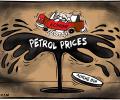
Amid news of a fuel shortage in some parts of the country and wider unrest over fuel issues in the neighbourhood, an analysis of the data from international tracker globalpetrolprices.com shows that the per litre price of petrol is higher in India than in seven out of its nine neighbours.

Continuing their selling spree for the sixth consecutive month, foreign investors pulled out a massive Rs 41,000 crore from the Indian equity market in March on anticipation of rate hikes by the US Federal Reserve and deteriorating geopolitical environment amid the Russia-Ukraine war. Further, flows from foreign portfolio investors (FPIs) are expected to remain volatile in the near term given the headwinds in terms of elevated crude prices and inflation, experts said. According to data available with the depositories, FPIs were net sellers to the tune of Rs 41,123 crore in the equity market last month.

India's equity markets are on a roller-coaster ride, after delivering spectacular returns for two consecutive years - in 2020 and 2021. The benchmark National Stock Exchange's (NSE's) Nifty50 is down 1.5 per cent in the first nine months of the current calendar year 2022 (CY22) as foreign portfolio investors sold Indian stocks due to rising bond yields in the US and across global markets, including India. The sell-off in the Indian equity markets has, however, not been broad-based and largely limited to sectors facing earnings headwinds from rising interest rates, lower commodity and energy prices, and likely economic recession in advanced economies.

S&P Global Ratings on Monday retained its forecast of 9 per cent contraction in the Indian economy for the current fiscal, saying even though there are now upside risks to growth but it will wait for more signs that COVID infections have stabilised or fallen. S&P, in its report on Asia Pacific, projected the Indian economy to grow at 10 per cent in the next fiscal.
Analysts believe that investors should look at stocks that hit 52-week lows only if they have a dividend paying track record, are debt-free and have sound fundamentals.

Everyone in Bollywood, it seems, is taking turns to soak in the sun in the Maldives.

Morgan Stanley Sales & Trading, US, believes the stock is better value for money than others and has a upside as high as 73 per cent. A slowdown in the economy has hit demand and led to a fall in overall consumption in an auto market which till recently was one of the fastest growing in the world.

Stars celebrate International Yoga Day.

Malayankunju is a coming-of-age survival drama that has its heart in the right place, notes Divya Nair.

Where the larger-than-life villain hogged the show by hurting the hero or throwing hurdles in his path, the role of his female counterpart has evolved from seductive sidekick to she-devil.

10 high dividend paying stocks across sectors that are expected to maintain or even increase their pay-outs in FY23 thanks to faster earnings growth in the last four quarters.

Bulls might be on the rampage on Dalal Street but lofty valuations of the Indian equities present a reason for concern and the markets could perhaps witness up to 10 per cent correction, according to analysts. Benchmark indices have been on a record-breaking rally lately and August witnessed the stock market reaching many new highs. The BSE benchmark soared over 9 per cent last month.

In a bull-case scenario it sees the Sensex at 61,000 levels, while it's bear case scenario pegs the Sensex at 41,000 levels by December 2021.

Wade will instead head to New Zealand with Australia's Twenty20 squad for a five-match series starting on Feb. 22 in Christchurch.

'I'm angry. Angry at Will Smith. Angry at Chris Rock.'

'The minimum holding period for equities should be three years.' 'Try goal-based investing.' 'Link your equity portfolios to specific goals such as retirement, purchase of a house or car...'

After consumer price index jumped the 6.3-per cent mark in May and wholesale inflation set a record of 12.94 per cent, house economists at Swiss brokerage UBS Securities have warned that the country is facing more upside risks on the inflation front that is set to averaging at 5 per cent for the year. Rising prices of edible oils and protein rich items pushed retail inflation to a six-month high of 6.3 per cent in May, breaching the comfort level of the Reserve Bank and thus rendering reduction in interest rates a difficult proposition in the near term. Led by petrol price, that has crossed the Rs 100-mark in many states, wholesale inflation too accelerated to a record 12.94 per cent in May. While crude oil has crossed $70 a barrel on account of rising prices of crude oil and manufactured goods due to spike in commodities, and the low base of last year due to the lockdown.

Investing in unlisted shares is not difficult. At any given point, many investors and employees are willing to sell their holdings because they need money. Buyers can negotiate a price with them, suggests Sarbajeet K Sen.

'The FY2023 inflation outcome is likely to exceed the RBI's current forecast by a wide margin.'

27 mountaineers perished in an avalanche in the mountains of Uttarakhand last week. The mountaineers were returning from a trek to the Draupadi's Danda mountain peak when disaster struck at 8.45 am in the morning.

Jahnavi Patwardhan, yoga expert at Sarva Yoga, explains how yoga can help you improve your sexual health.

A group of retired civil servants on Tuesday wrote an open letter to Chief Justice of India N V Ramana seeking intervention by the Supreme Court in the alleged illegal detention, bulldozing of residences and police violence in Uttar Pradesh following protests against certain objectionable remarks made by two now-removed Bharatiya Janata Party functionaries.

Celebrity yogini and fitness expert Ira Trivedi suggests these postures to strengthen your spine and improve your posture.


The Reserve Bank of India (RBI) on Wednesday announced to increase the policy repo rate by 50 basis points to 4.9 per cent, the second hike in five weeks aimed at quelling the inflation. The MPC vote was unanimous and has decided to keep stance withdrawal from accommodative, RBI Governor Shaktikanta Das said in a press conference on Wednesday. The decision was taken during a three-day meeting of the RBI's Monetary Policy Committee (MPC) to review the interest rates in the country. The MPC voted unanimously to increase the policy repo rate by 50 bps to 4.90 per cent," Das said.

'When my heart grows heavy I think back to happy times.'

'Any normalisation exercise will bring its share of volatility.'

The shipping business is like the heaving sea -- it's up and down, observes Shyam G Menon.
